Welcome to October’s diary entry. This month has been a very difficult one in the writing department. With every step I have taken forward I seem to have, somehow, ended up two steps back from where I started. Every little bit of music is scrutinized for consistency against an ever increasing amount of music, as the large picture is as important (if not more) as the small one.
For the longest time I had been thinking about how to organize the music of every house in Westeros in a way that was easy to keep track of. I ended up creating Family trees made of leitmotifs which I will be uploading to each Westerosi house. Many entries are still blank, but at least they give an idea of how complete the roster of each family is on the website. They come in handy to see the relation between members of each house as well as potential hidden links…
One important caveat is that the leitmotif representing a character on the Leitmotif Family Tree It is the simplest musical cue by which the character can be identified and does not necessarily encompass the entirety of the character musical arc. I have other documents to track the progress of a character’s musical progression that I’d rather keep under wraps.
As seen above in the Leitmotif Family Tree for House Stark, Jon Snow’s leitmotif has been uploaded to the website, which had been long overdue. See you next month!
Hello and welcome to September’s diary entry. This month’s update will be on the briefer side as there are some bigger updates simmering in the back-burner that need more time to finish cooking. With that said, this month House Tyrell has been updated with Margaery Tyrell’s leitmotif and House Lannister with Tyrion Lannister’s leitmotif.
One of my goals for the first year was to upload the leitmotifs of the main characters of the main Houses of Westeros, which is close to 50 different leitmotifs. So far, with 5 months left on the calendar there are 16 leitmotifs on the website, so quite short of the 30 that should have been uploaded by this time. One of the main causes of the delay is the constant need for revision of already written music and the thus the need to write and rewrite music that fits well enough into the tapestry already woven. There is nothing both more rewarding and frustrating as writing music that fits a character or a house better than the previous version. Having to review all the previous written music to see what needs to be adapted or simply discarded can be painful, although not as much as listening to music that is not as good as it could be.
But sometimes it is difficult to know how to feel about a new leitmotif right after it’s been written and I feel I need to sit on a it for a long time before I commit to it. For example, Tyrion Lannister’s leitmotif is one that I had to write and rewrite many times, putting each and every attempt aside and not listening to it for weeks (sometimes months), to see how I felt about it when I would eventually go back and listen to it again. The goal was always to create a leitmotif that resembled Tywin’s but with the right balance of slight mockery and casualness that make Tyrion who he is, and all without sounding silly or a parody.
The version that is finally uploaded today was written at least 3 months ago and had been ready to be uploaded for last month’s diary entry, but I wanted a bit more time and let the music win me over. A month later I can say that when I listen to it I can picture a cocky Tyrion at the beginning of A Game of Thrones, flailing his Lannister name left and right to get what he wants without a care in the world, but also a deeply hurt man who, if not careful, will become as bad as the father he mocks.
At the moment there are a score of leitmotifs in this musical limbo where they await to be either discarded, rewritten, or enshrined. Hopefully some of them will see the light of day soon enough. See you on the next diary entry!
Welcome to Ausgust’s diary entry. Plenty of new music has been uploaded to the website this month that won’t be covered here as it would make this entry way too long, so you can check for yourself the themes for Arya Stark and Bran Stark over at House Stark’s page; Stannis Baratheon’s theme which has been added to House Baratheon’s page; and the newest addition to the Westerosi Houses roster: House Tyrell, with the addition of Loras Tyrell’s theme.
What is instrumentation?
The main topic to cover in this month’s entry is that of instrumentation, which is the use of instruments and their combinations in a piece of music. So when a composer writes a piece of music they need to make decisions not only on what notes to use, their rhythm, harmonies, loudness, range, etc. but also which instrument will be playing the music. Hence, instrumentation (also referred to as orchestration) plays a crucial role in any piece of music, as the melody played on a flute will sound radically different compared to when played on a tuba.
Just as Westeros is made of kingdoms ruled by houses, the orchestra is made of sections ruled by families of instruments. There are 5 main sections in the orchestra: Strings, Woodwind, Brass, Keyboard, and Percussion. So for example, in the Woodwind section there is the family of the flutes, the family of the oboes, the family of the clarinets, and the family of the bassoons.
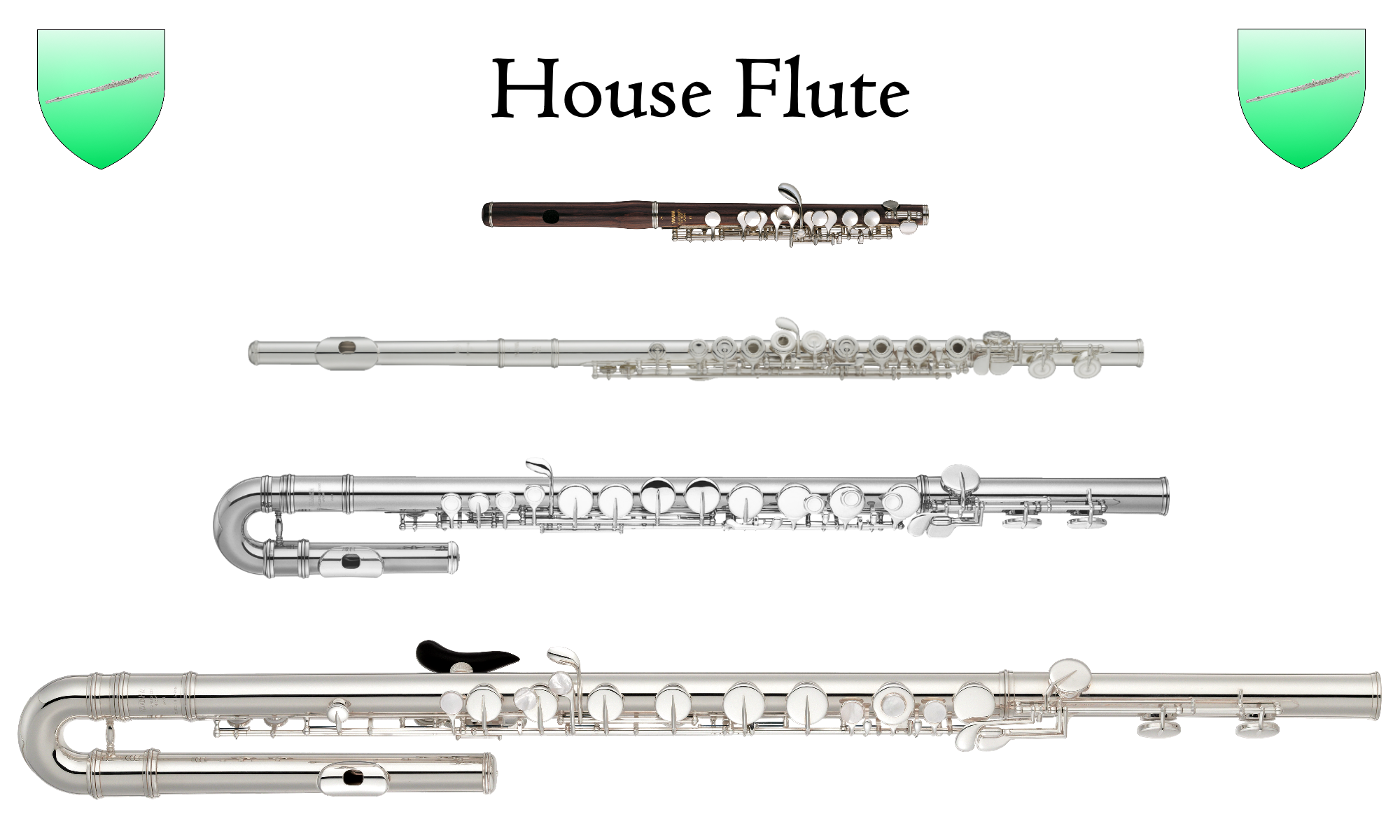
House Flute
House Oboe
House Clarinet
House Bassoon
One family of instruments wouldn’t be a family if there was only one member, so using House Flute as an example we can see their members here from top to bottom: the Piccolo Flute, the Concert Flute, the Alto flute, and the Bass Flute. (To keep it simple we will exclude other members of the flute family that are rarely heard, like the Soprano Flute, the Treble Flute, the Flûte d’amour, and the Contrabass Flute, among others)
Of course not everything falls neatly into a category, and just as in Westeros there are disputes over what territory belongs to what House, there are disputes over to what family and section and instrument belongs, but here we will keep as simple as possible.
Instrumentation in Westeros
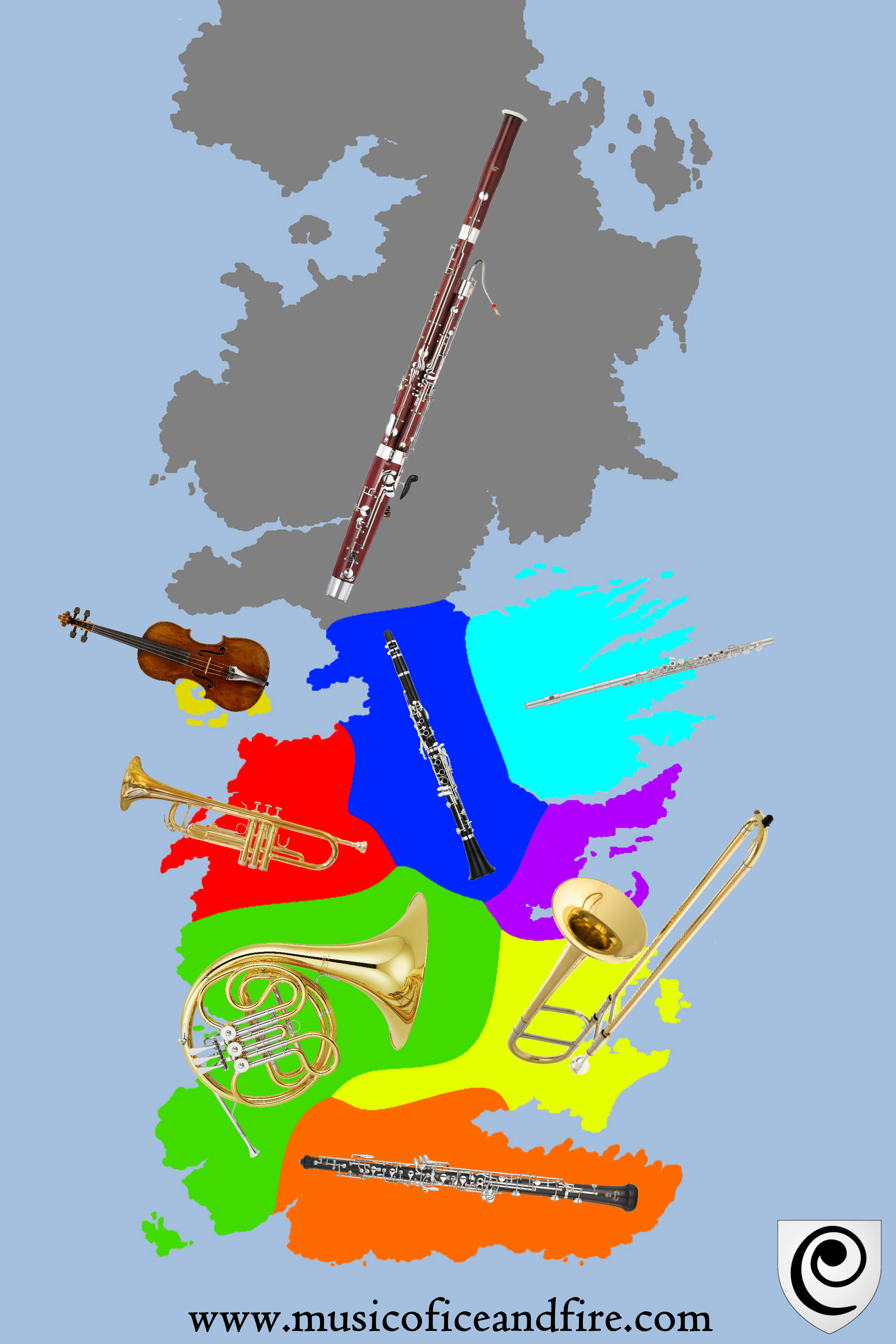
After that introduction to the instruments of the orchestra we can focus our attention to how all of this applies to Westeros. Each kingdom in Westeros has not only a distinct culture and traditions, but also geography, climate, food, religion, and of course musical instruments. There are families of instruments strongly associate with some regions as we can see in the map below:
In The North, the Bassoon, with its low, deep earthy sound embodies the harshness of its climate.
In The Riverlands, the Clarinet’s reedy and mellow tone reflects the flowing of its rivers.
In The Vale, the Flute lightness and agility allows it to teach as high as high as the Mountains themselves.
The Crownlands and The Stormlands have, since the Targaryen Conquest of Westeros, relied on the Trombone to display the powerful and stately qualities of their Houses.
In The Westerlands, the brightness and intensity of the Trumpet shines as much as the gold from its mines.
In The Reach, the Horn has a warm and mellow sound that bathes the landscape.
In Dorne, the Oboe’s intense and piercing sound can become beautiful as an oasis in the desert.
In the Iron Islands, the violin’s open and calm sound can turn rough and menacing just as the sea itself.
This doesn’t mean that those are the only instruments used in those regions, far from it, but a connection can be made between the deep and woody sound of the bassoon that fits The North better than it fits The Westerlands, for example. This means that characters from a region will be distinguishable from others based not only on their leitmotifs, but also their instrumentation.
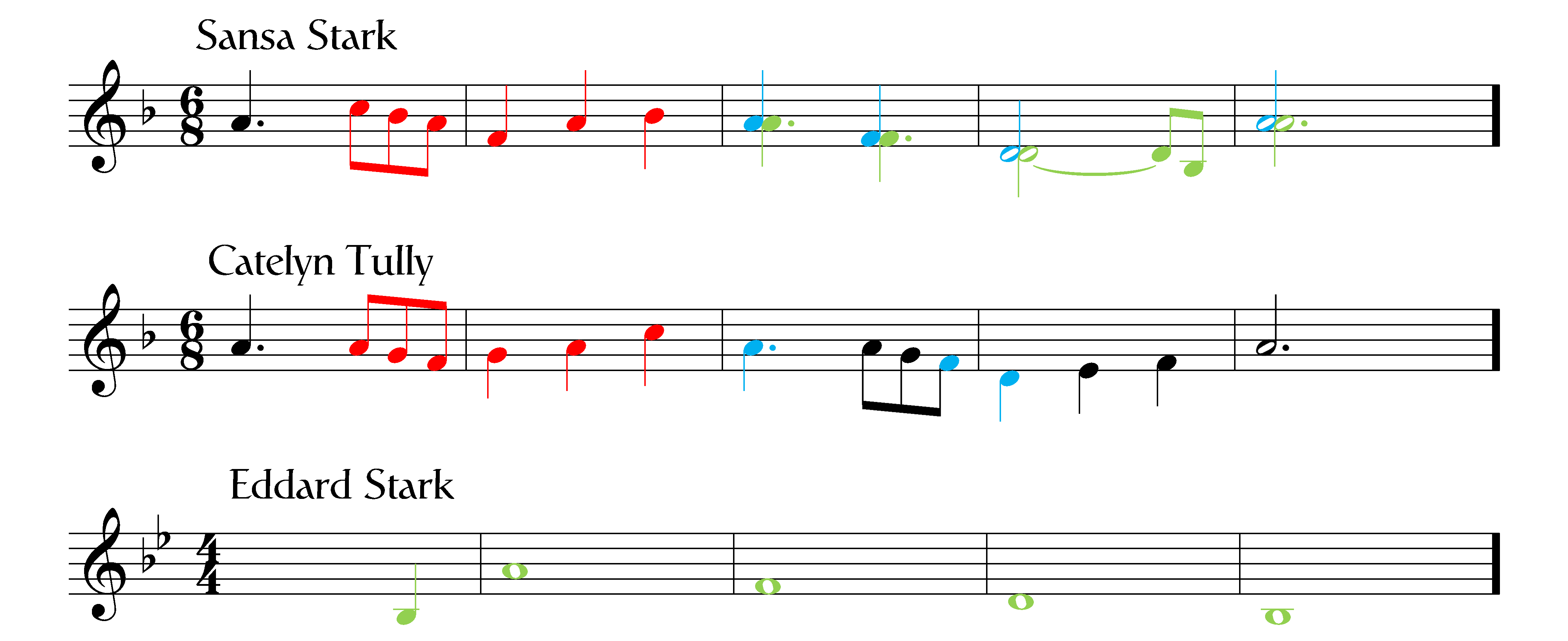
For example, members of House Tully tend to use instruments of the clarinet family as befits people from The Riverlands. A good example of this is Catelyn Tully, whose leitmotif is played by a Clarinet in B♭.
Fig. a – Catelyn Tully
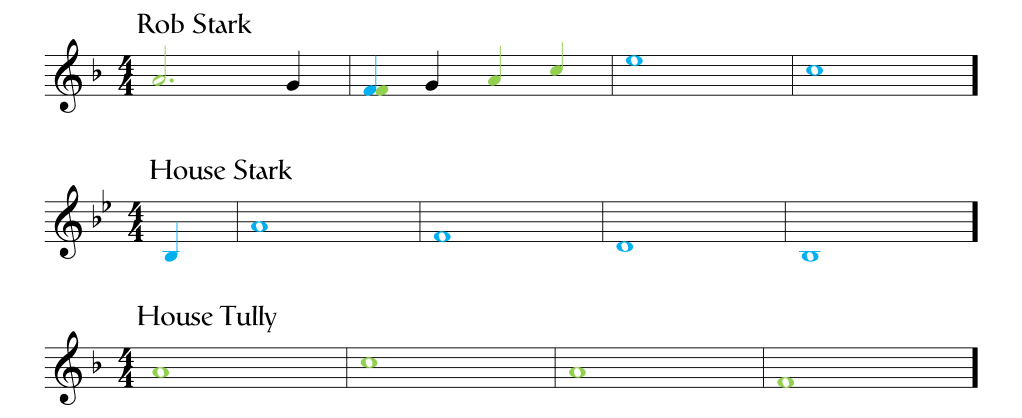
As her children Robb, Sansa, Bran, and Rickon take after Tully look, their leitmotifs are also played by instruments of the clarinet family.
Fig. b – Robb StarkFig. c – Sansa StarkFig. d – Bran Stark
Arya Stark, taking after her father’s Stark look should have a bassoon playing her leitmotif, but instead it is an oboe who plays her theme. This is because Arya is still too young to fully embrace the deep and dark sound of the bassoon, and since the oboe and bassoon families are both double-reed instruments which share many qualities of their sound, the oboe will play her leitmotif for the time being. Another reason is that Arya, looking up to Princess Nymeria of Dorne, can be easily associated with the Oboe than any other instrument.
Fig. e – Arya Stark
As characters go through their arcs in their story so will the instruments that play their leitmotifs change. This brings another layer of difficulty when composing, but at the same time adds a layer of depth to the music with the goal of keep helping the listener to better understand and enjoy the music.
I hope this introduction to instrumentation was useful! See you in next month’s entry!
Welcome to July’s diary entry. This month there has been a lot of effort into beautifying the webiste, expanding onto other platforms and of course new music.
A nicer browsing experience
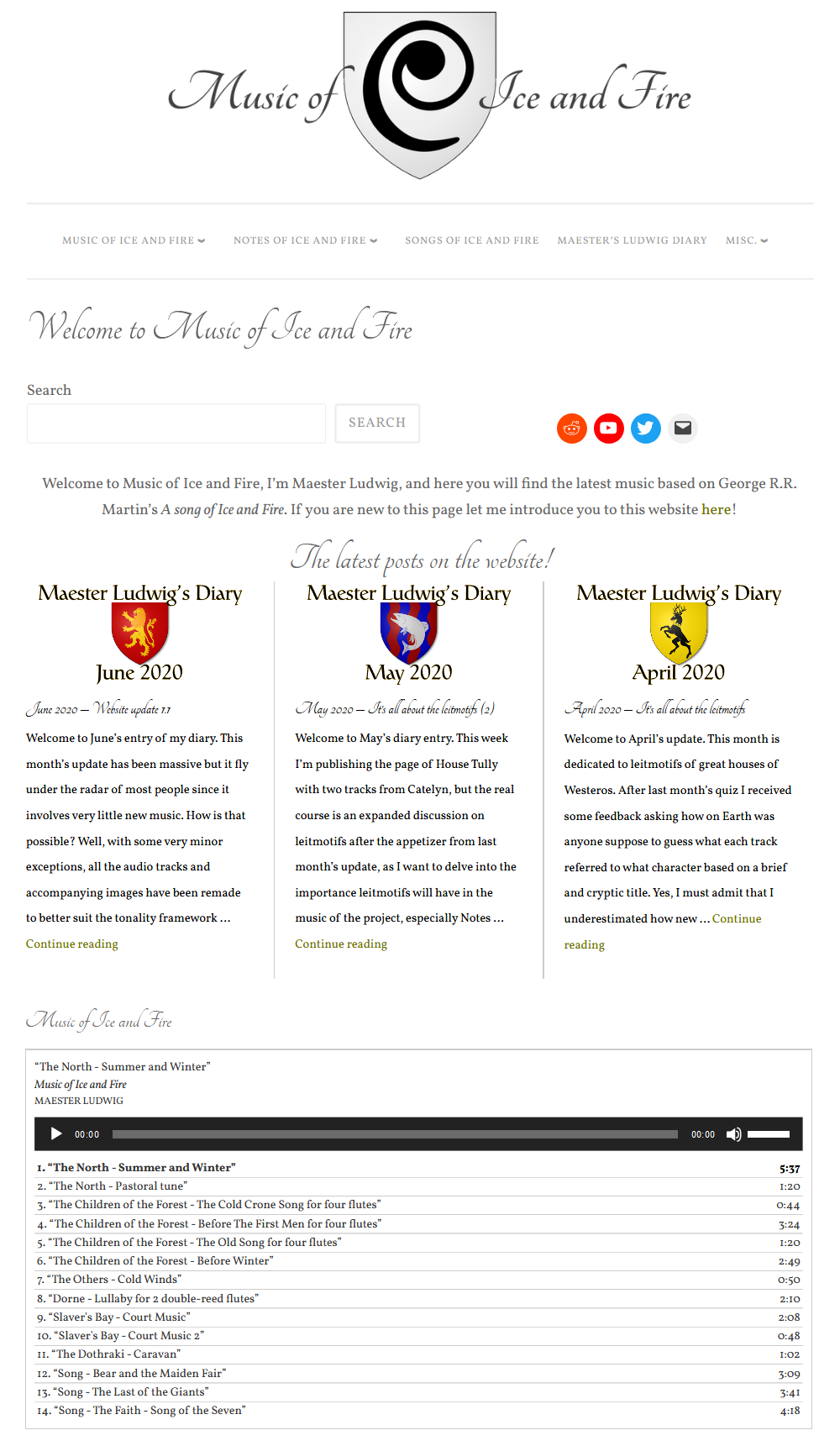
Last month there was a significant overhaul of the website in terms of tracks but now it was time for a more obvious overhaul in terms of appearance and usability… so a facelift has been done to make the website nicer to look at and easier to move around.
The long-winged introduction that used to cover the homepage has been moved into the About page, making way for a more useful homepage where you can now find links to the latest posts (boasting nice thumbnails) and playlists with music tracks to make for a nicer listening experience.
Also the search field is easier to find now and links to Music of Ice and Fire on other platforms have been added, which brings us to…
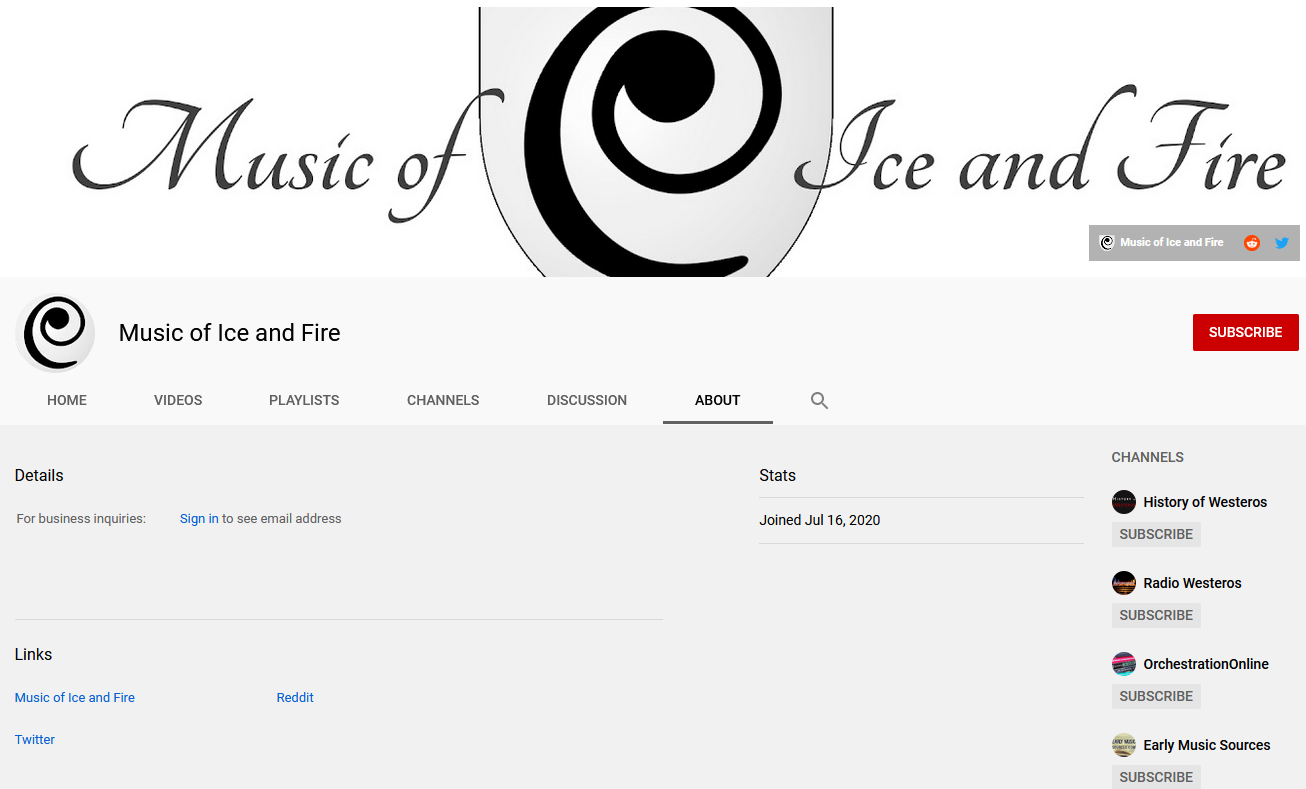
Music of Ice and Fire on Youtube
The YouTube channel is now online! There you can find videos of the music tracks with the nice addition of some notation if you want to follow along.
The video format will allow me to explore new ways to create media content so stay tuned!
Music of Ice and Fire on Twitter
Some friends have been nagging me for a while about creating a Twitter account to make it easier to share news about the website and I have to admit I have dragged my feet about it but I’m going to give it a try and see how it works. From now on I’ll be announcing updates to the website on Twitter and anything else I can think of.
One more leitmotif
Of course none of this would matter if there weren’t new music uploaded to the website. I have spent a lot of time on new leitmotifs and ideas which usually means there are few tracks that make it all the way to being finished in time for the update. Sansa’s leitmotif is a good example of the leitmotif development I spend much of my time and energy into.
When we first compare Sansa’s and Catelyn’s leitmotifs the similarities are obvious but Eddard’s influence is not as clear at first glance. Just as we saw with Robb a few months back in May’s diary entry, Sansa favors her Tully side much more than her Stark side. In fact, the first two measures are almost identical, but her Stark side is hidden in plain sight if one knows where to look. Taking the last iteration of her leitmotif (32 seconds into the track from above) the ending of her melody shows clear signs of the Stark lineage. The slow descending notes could be seen either as Tully or Stark, but the last two notes that end the leitmotif are clearly the Stark trademark signature, the Wolf’s howl, which the leitmotif had been building up to but never committed to until now.
Next month’s update will be focused entirely on new music, where I hope to publish many new themes that carry on the theme of interconnected ideas between characters. See you then!
Welcome to June’s entry of my diary. This month’s update has been massive but it fly under the radar of most people since it involves very little new music. How is that possible? Well, with some very minor exceptions, all the audio tracks and accompanying images have been remade to better suit the tonality framework I have devised for the music. What does that mean? Simply put, up until know I had been writing music in the key that I liked best without any narrative concerns in mind, allowing me to focus on creating musical material without the trying to make it all fit from the beginning. This method has proved very successful, but alas, I always knew that at some point I would have to rework some music to fit the tonality framework for the music to have the cohesive narrative that I want for it. So this month I decided to bite the bullet and spend endless hours going through music files transposing, arranging and orchestrating music in different keys. The music is essentially the same so that’s why I say it has been a huge update that will go by virtually unnoticed by most people (unless of course you have perfect pitch).
The only collection of pieces that have survived the transposition cull have been the Targaryen, who used to share the key of D with the Starks, before the wolves were relocated to B♭. Why these keys in particular? I’ll talk more of that in a future diary entry about tonality and its impact on the narrative because I think it is a very interesting subject.
In any case, it wouldn’t be an update without some new music so leitmotifs for House Lannister have been added to the page, where you can now hear the Lion’s roar and Tywin Lannister’s theme.
Welcome to May’s diary entry. This week I’m publishing the page of House Tully with two tracks from Catelyn, but the real course is an expanded discussion on leitmotifs after the appetizer from last month’s update, as I want to delve into the importance leitmotifs will have in the music of the project, especially Notes of Ice and Fire and Songs of Ice and Fire.
What is a leitmotif?
Leitmotif is the English form of the German word leitmotiv (meaning leading motif) and its basic definition is a musical idea (a melody, a rhythm, a harmonic progression, etc.) that is associated to a non-musical idea (a person, a place, an event, an emotion, etc.) and thus every time the musical idea is heard the audience is made to think of something else that is not musical.
Leitmotifs are usually associated with Richard Wagner, and even though he wasn’t the first composer to ever use the concept of associating musical ideas to extra-musical ones he is responsible for its popularization. What Wager did that no one had ever done before (at least not in such an extensive manner) was the use of leitmotifs in his operas (music dramas as he called them) where almost characters, objects, places, events, and feelings had leitmotifs of their own: A character walking on stage would be accompanied by said character’s leitmotif, followed by the leitmotif of the poison he is holding in his hand to kill himself as he mourns the death of his beloved (cue beloved’s leitmotif and death leitmotif).
Nowadays we have become accustomed to this use of leitmotifs in movies thanks mainly to John Williams, who re-popularized the concept with scores filled to the brim with leitmotifs (Star Wars, Harry Potter, and Indiana Jones to name a few).
The good, the bad, and the ugly leitmotifs
Leitmotifs are an incredibly resource and to explore them I will categorize them in three ways: Good Leitmotifs, Bad Leitmotifs, and Ugly Leitmotifs:
A Good Leitmotif is one that clarifies what is happening plot-wise, and makes it easier for the audience to follow along. Good leitmotifs can also link ideas together and give them new meaning when combined.
On the other hand, a Bad Leitmotif happens when it is used almost haphazardly, creating more confusion that if there had been no leitmotif at all. Some bad leitmotifs are bad simply because they are not distinctive enough, and they can be missed easily or what’s worse, misheard and taken for an entirely different idea.
But what is an Ugly Leitmotif? I’m glad you asked. There are times when the Leitmotif cannot be said to be bad, but it simply doesn’t perform as it should or it has unexpected consequences. Unlike bad leitmotifs they are not the result of incompetence on behalf of the composer, but unavoidable problems that take come with the territory:
The Dog Whistling effect: This problem goes back all the way to Wagner’s days and it sadly doesn’t have a solution. Basically, the leitmotif is so good and effective that if the leitmotif doesn’t play when the audience expects it then it feels as if the music is wrong. This results in the leitmotif appearing every single time it should, without exceptions, resulting in an unnatural mannerism, where a character is mentioned and the leitmotif is played by an instrument almost instantly, like a dog responding to its master’s whistle.
It is a catch 22 where the very essence of a leitmotif is to reinforce non-musical elements by playing consistently when it applies in context otherwise its effectiveness is weakened, but if it’s used constantly it becomes cliched. What is the solution? There is no one solution here since it is intrinsic to the technique and one is forced to live with it. The best way to deal with it is to be judicious when deciding what leitmotif needs to be played, and when exceptions can be made in order to find a balance between meeting expectations without resulting predictable.
A leitmotif set in stone: Usually, when a leitmotif is truly great it basically revolves around its most memorable incarnation, so it doesn’t matter if the non-musical idea has changed and developed, the leitmotif will rarely change at all from the original version. This could be dismissed as not a problem if one adopts the idea that leitmotifs are simply another tool in a composer’s toolbox to extract a reaction from the audience and they are complementary to the plot, but I still think this is a problem that needs to be remedied.
To give an example most people would be familiar with, in Star Wars, what is known as Luke’s Theme (also known as Binary Sunset) is mostly (but not exclusively) to represent the figure of Luke Skywalker. This gorgeous leitmotif is so incredibly well defined in the Binary sunset scene that it can never change nor develop. It is exactly note by note exactly the same when it was presented in A New Hope, when Luke was but a farmer boy in a desolate planet with no future, as when in Return of the Jedi (SPOILER ALERT) Luke, as the last Jedi Master, burns the corpse of his father after redeeming him and having both brought down the emperor and freed the galaxy. That is not a world but a galaxy of development for a character, but the music is still stuck where he was 3 movies ago. This to me is incongruous to me and is something I rack my brain about how to address in A Song of Ice and Fire but the solution is clear: when a character develops through the books their leitmotif needs to change and develop with them, even if it means their original iteration of their leitmotif is never heard again later on, the same way that some aspects of their personality will never appear again after going through some trauma. There is a continuum where some characters experience many changes while others remain the same for the longest time.
Developing Leitmotifs: Catelyn Tully as Maiden and Mother
ALERT: SPOILERS FOR ALL PUBLISHED BOOKS UP TO A DANCE WITH DRAGONS
This last point of development is the reason for many joys and frustrations when writing music set to the narrative of A Song of Ice and Fire. It is not only toiling at the piano for hours looking for that one melody that matches what you think a character should sound like, it’s doing that for the same character more than once, sometimes half a dozen or more, never forgetting that all the versions of the leitmotif need to connect coherently. Sometimes a character goes from blissfully happy in book one to demented lunatic in later books, to dead, to vengeful undead, but the leitmotif needs to grow and develop with the character just as they do.
There are two leitmotifs for Catelyn I feel confident enough I can to use to make the point about the problem of setting leitmotifs in stone and not letting them grow with the character. The first leitmotif is Catelyn in her Maiden days, before marrying Eddard.
Catelyn is the model of what a maiden from the Riverlands should be. For now she is a girl who dreams of love and family who will fulfill her duty by marrying a noble lord chosen by her father. She is playful, beautiful and above all a Tully of Riverrun, of course. House Tully’s leitmotif is represented in the blue notes, and this is shared by all Tullys and descendants of Tullys. The leitmotif is very simple, a note waving up and down, always jumping in thirds around a central note. Three notes in total for the three core principles of the Tully’s: Family, Duty, Honor. Catelyn not only achieves a great balance moving back and forth between all three, she also manages to do so inserting her own personality into it, with playful notes in between the jumps that make her so cheerful, and a high and adventurous high note right before the end.
Almost twenty years later he second leitmotif is Catelyn well into A Clash of Kings.
Catelyn has lost a husband, children, and is fighting a war for survival. When she was young she could go up and down twice has fast the Leitmotif of the Tully’s, but now weariness has taken not just a toll on her, but also the notes that gave her a playful sound. Now there are only two notes left (who could these two notes represent I wonder), one of which she is incapable of reaching anymore as she is too far away and no matter how much momentum she has. The pace is slower too, and the accompaniment much more somber. This leitmotif also expands into a B section in the minor mode that didn’t exist before any tragedy had happened to her but this material will be expanded in future versions of her leitmotif, so I won’t go into detail here.
Now that we know what Catelyn’s leitmotif is we can look at Robb’s theme and see how his leitmotif is a combination of both Ned’s and Catelyn’s, with the Tully side being slightly favored. As it is a crucial element in the books, it is also important to have it in the music as well. Some people say that these elements are too difficult to be perceived unless one is explicitly told what to look for, and I agree, bur to me these are the kind of details where the magic happens, just like it takes us readers many rereads to find all the hidden details of the books and foreshadowing, this is my attempt at recreating such detail and foreshadowing in the music.
On the difficulties of complex leitmotifs
When I explain these kinds of details people usually ask me how much of this is planned in advanced and my answer is that while not 100% is planned in advance when I start working on a leitmotif, there is nothing that is not justified by the time I consider it finished.
Sometimes I work chronologically, starting with the leitmotif of a character when they are young and work my way forward developing the leitmotif with the character (this is one of several reasons why children can be easier to write leitmotifs for, as they are a clean slate). In the particular case of Catelyn, the Mother version of her Leitmotif was written back in 2016 before the Maiden version, so it was a question of writing backwards wondering what was her leitmotif when she was younger, more innocent and less traumatized.
Other times I have to finish so many more specific leitmotifs to merely be able of thinking of other leitmotifs. This is specially the case of characters who were brought up by people who were not their parents (think bastards but also wards) since the conglomerate of parental figures and perceived identities makes it a challenge to find the true essence of their real being (looking at you Jon, Joffrey and Theon)
Also, I admit there till say some main characters that have had no time dedicated to them since there are way too many variables up in the air to decide to spend hundreds of hours only to see it all by the wayside when the next two books come out.
That’s been all for this month. I hope you enjoyed this diary entry. See you in Summer!
Welcome to April’s update. This month is dedicated to leitmotifs of great houses of Westeros. After last month’s quiz I received some feedback asking how on Earth was anyone suppose to guess what each track referred to what character based on a brief and cryptic title. Yes, I must admit that I underestimated how new somebody listens to the music for the first time. When you spend so many hours working on something you lose perspective, the same way a comedian usually doesn’t find their own jokes funny. So, to try and remedy this I have moved leitmotifs up to the top of my priorities to lay the groundwork necessary to understand the gist of the music. This month I have updated three Houses pages: House Stark, House Baratheon, and House Martell with tracks and an excerpt of notation to highlight the leitmotifs that make up the theme.
Let’s take the Baratheon leitmotif as an example. This two-note theme represents House Baratheon. It is comprised of a short note, usually on the upbeat, followed by a longer note a perfect fourth up, usually on the downbeat. Now, this doesn’t mean that every time two notes a perfect fourth apart show up it is a reference to House Baratheon; there are other aspects that need to be taken into consideration like the instrument used, the tempo, and the prominence of the notes in the overall melody. Let’s compare Robert’s and Renly’s theme to see how the leitmotif plays a role in both identifying the characters and how we can tell them apart.
Robert Baratheon
Renly Baratheon
The most striking difference is that Robert’s theme is in F minor while Renly’s is in F Major. Robert’s theme is was made for a warrior while Renly’s theme is for basking in clamor. Both themes use a very simple form of a-a’-b. This means there are three segments in the melody: a first segment is established followed by a repetition itself with some small changes followed by a new segment that brings the theme to its conclusion. On the surface both themes are the same but digging in deeper we can see (and hear) that Roberts a’ section acts as a bridge toward the b section, going up and increasing the tension, while Renly’s a’ section is exactly the same as it’s a section except for two repeated notes. The Baratheon leitmotif is repeated six times in Robert’s theme, always moving up in pitch until it reaches its climax at the very end of section a’. This is because Robert paid his dues and reached his zenith only after toiling through his journey, hammer in hand at the battle of the Trident. On the other hand, the Baratheon leitmotif appears only 4 times in Renly’s theme and he never reaches the high C note as Robert does, far from it: Renly tries to reach the high C too soon but falls short, and instead of trying to develop the section the material is simply repeated almost without changes in an attempt to mimic his older brother’s greatness. There are other small aspects that play an even more subconscious role, like how Robert’s theme has a note on almost every beat of the theme (the only exceptions being the long-held notes at the end of section a and section b); this relentless beat reminds us of Robert’s hammer, propelling the music forward constantly. Renly has no such relentless beat as he is force to fill in the gaps with repeated notes in an uneven mix of short and long notes more proper of a pompous cavalcade than a battle.
I’m not trying to put Renly down here, only to show the kind of minute details that needs conscious and repeated listening in order to be revealed to the listener. After all, if the books get better with every reread as the once overlooked hidden details are revealed I feel the music attempt to do the same.
I leave it to you to listen and compare the themes of Eddard and Robb in the House Stark page, and try to find the similarities and differences. Of course, the picture will still be an incomplete one, since the Tully leitmotif hasn’t been revealed yet (although Catelyn’s theme was one of the mystery tracks in the quiz last month).
Over on House Martell’s page Elia’s and Oberyn’s theme are by far the most difficult to compare to each other. Elia’s theme has existed for a very long time (I wrote it in 2016) and I wrote Oberyn’s this year. They don’t share the same scale, nor the same key, the leitmotif is slightly different in both themes, and there are other hidden leitmotifs in their themes that play a bigger role that I don’t want to reveal for now. And yet they both are recognizable as members of House Martell thanks to the sumptuous 4 note leitmotif.
If you have any more comments please let me know down below, on reddit, or sending me a crow. Next month I will bring more leitmotifs from the Houses of Westeros and a song from the Reach.
For the second update to the website I had in mind a mix of writing and new music in equal parts. Now, with the current situation most people are (wisely) choosing to stay at home and find whatever means of entertainment they can, so I asked myself if there was anything I could do to spice up this month’s update to make it more fun. So I decided to create a musical quiz where I’m uploading a series of tracks with no name, just a little hint about the character, house or place they portray and see how close people get. Please share your guesses in the comments!
Track 1 – Nobody is guaranteed a happy ending.
Track 2 – Like parents, like son
Track 3 – An unexpected return
Track 4 – The Older Brother
Track 5 – A proud house from the North
Track 6 – A land far away from Westeros
I hope you had some fun guessing and you liked the tracks! I’ll announce the answers in the next update.
Welcome to Music of Ice and Fire. I’m Maester Ludwig and I’m here to break the 4th wall and talk a bit about this project, how it came about and what to expect.
It all began a few years ago when a friend asked my opinion on a particular musical theme that served as the main theme to a TV show and all I could muster was a ‘meh’. It was catchy, but that was about it. The soundtrack that accompanied the show wasn’t much better. Now, I understand the constrains of the media and I admit the music was exactly what it needed to be, a mere background to the visual media that it was accompanying.
Could have I done a better job? Probably not. I wouldn’t find it possible not only to work under the constrains of a deadline in a medium where my work would be relegated to the background, but also under a musical supervisor whom I to whom I must acquiesce every demand to change my work. I have been there before and I know by now that I am too deeply protective of my work to know that I wouldn’t produce quality work under such constrains.
Having given up on this alternative form of entertainment I found myself going back to the question of what a truly musical experience that reflected the drama of A Song of Ice and Fire would be like. One where no deadlines applied, no external pressure; only the creation of a compelling body of work that reflected the narrative accomplishment of the books. The idea was fascinating and I would spend hours at the piano experimenting with ideas over and over again. It wasn’t too long before I realized that it such an enterprise would be a life-long commitment: with hundreds of characters, organizations, locations, and objects, all perfectly connected in a believable universe it was clear that to truly honor the books a minimum of preparation was going to be needed.
I decided that the same way a linguist might create a language for a fictional race, a musician might be able do the same. It was obvious since the beginning that there was not only the potential to do such a thing, but also a necessity if one expected to produce a body of work that lived up to the expectations. I started by asking questions about every single aspect of the peoples living in Westeros the same way an ethnomusicologist would in real life: ‘what instruments can they produce where they live and how would they be tuned?; ‘what textures would they be capable of given their instruments?; ‘what social function did music play in their lives?’; ‘what influences did they assimilate from other nearby cultures and how did these impact their music making?, and a hundred other questions necessary to build a realistic musical entity around these cultures.
Copyright Concerns
Some years passed and I found myself enjoying the process and sharing it with my close friends. Many suggested to ‘do something with this’, but I kept refusing, for any attempt to share it with the wider public could only attract unwanted attention (aka copyright lawsuits). This is something I am very aware of to this day, and it causes quite a lot of concern knowing that any day a cease and desist letter could throw a wrench in the works. Posting a couple of pages and samples on a reddit thread was all I dared to do for a while but recently I came to the conclusion that sooner or later I needed to ‘do something with this’. This website is what I am doing with it. This is why there are no copyrighted images nor illustrations on this website. There is no advertising, no donation button. My lawyer (yes, I sought professional legal advice before making the website) tells me what my writing on the website falls into the category of transformative work, and that all the actual music I write and post here is entirely mine. To me that sounded good enough, so I decided to give it a go and commit to it: get a domain, a subscription, compile all my notes and start transcribing.
Delays even before starting
I happen to have two initial Rs in my name so I don’t know if it is coincidence or what but I can say I sympathize with George and blowing past deadlines. I made the decision to create the website late November 2019 with the intention to publish it “within two weeks”. Not even a week into it I decided to reschedule for New Years’ Day. I was doing well but as the deadline approach I saw the amount of work I needed to get ready for it double with every single task I completed. Working on the website every single hour I had available wasn’t enough and finding myself in 2020 I just decided to publish at any time so long it was before February… and it was then when I decided I didn’t want to have timed deadlines anymore: “I will launch the website when it is ready, and that’s my only real deadline”.
Current State and What to Expect
At the moment there are massive holes in the chapters that are available. There are entire sections missing either because I haven’t had time to finish them or even to start them. For example, there are sections like “Instruments” that can be super simple to write or incredibly difficult, as it requires a lot of time and energy to come up with an alternative version of an established instrument that is viable. In the next diary I am planning to talk about this specific topic of instrument construction more in depth and how I go about solving the problems that arise. The sections that are published aren’t in their final stage, though, as I will keep enhancing what I have already written when I have the time or necessity to do so. I will add a note to the welcome page with the most recent updates as they happen in time so it is easier to look for new material when visiting the site.
Some other holes in the pages are deliberate for many reasons. The difference in progress made between some pages is so large that I regrettably had to cut some sections of certain chapters lest the disparity is too obvious to become an issue. One such case is the Lhazareen chapter, that was simply the largest of all, and it just didn’t make sense to me to have it be so. Eventually, a few weeks before launching the website I made the decision to cut all the in depth parts of the Flute Language (close to one thousand words and with many, many examples of notation, and music) because it would just dwarf sections like the First Men and the Andals, which I think should have center stage for now. Once the rest of the chapters catch up in terms of breadth and depth I’ll put back the Flute Language section in the Lhazareen chapter. It has become one of my favorite parts of developing music for this universe so it will definitely back at some point, hopefully in a few months. This means that of course the sections that are published now at launch are not in their final stage as I will keep enhancing what I have already written when I have the time or necessity to do so. I will add a note to the welcome page with the most recent updates as they happen in time so it is easier to look for new material when visiting the site.
Like I said before this is a life-long project. It will take many years to complete, if I ever manage, for not only am I a slow writer, I also have a full-time job where sometimes I have to do a lot of extra hours and even when I don’t I get home exhausted. Some days I grind in front of the piano to get nowhere with an idea, while others everything seems to flow as if it was always meant to be that way. There isn’t a single day I don’t work on it, doesn’t matter how tired I might be, it’s always on my mind.









 Music of Ice and Fire